
Azure performance, scale and AI: Insights from Mercedes-Benz World
Earlier this month, BlakYaks welcomed technology leaders, customers and partners to Mercedes-Benz World for ‘Driving Azure Performance and Scale Under Pressure’.
Set against the backdrop of Mercedes-Benz World and the historic Brooklands motor racing circuit, the day focused on a challenge facing many technology leaders today: how do organisations move faster, embrace AI and respond to growing business demand without compromising resilience, governance or platform control?
Across the morning's sessions, performance was discussed from several different angles, but the conclusion was consistent: speed alone is not enough. Whether building a Formula 1 team, scaling an Azure platform or introducing agentic AI into enterprise operations, sustainable performance depends on robust systems, talented people and strong foundations.
High performance starts with the foundations
Richard West, former Formula 1 business leader and co-author of Performance at the Limit, opened the day with insights from the world of high-performing teams. Drawing on his experience within Formula 1, Richard explored the behaviours, leadership principles and operating disciplines that enable organisations to perform consistently under pressure.
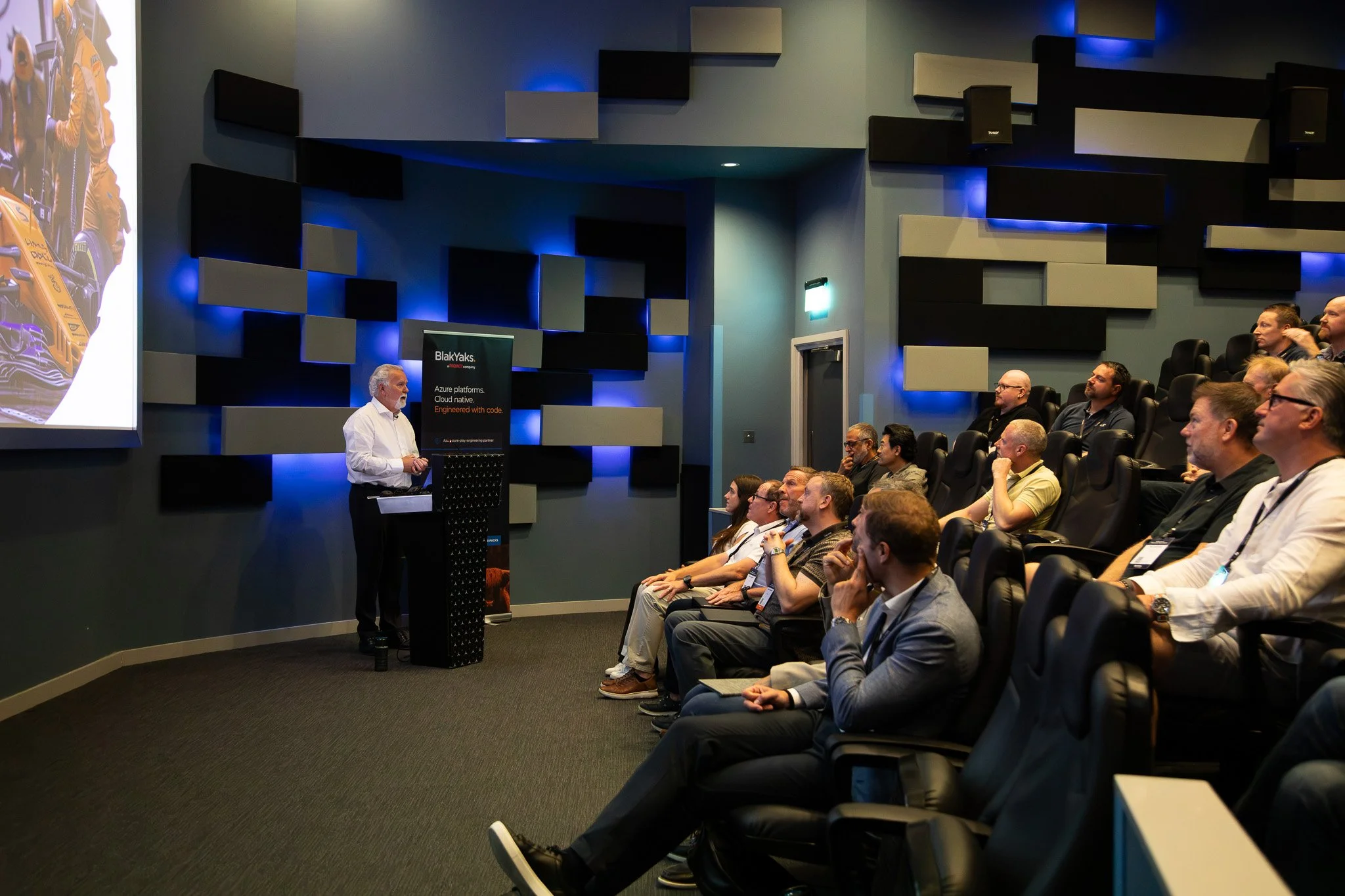
In motorsport, raw speed alone is not enough. Performance is the result of hundreds of interconnected decisions: clear accountability, effective communication, strong leadership and a culture focused on continuous improvement.
As organisations face increasing pressure to deliver new capabilities faster, inefficiencies within teams, platforms and processes quickly become business critical. Adding more technology or increasing delivery velocity does not automatically create better outcomes if the operating model underneath cannot support it.
The strongest organisations create stable foundations that allow teams to make decisions quickly, learn from results and continuously improve.
From AI adoption to the Frontier Firm
James Lees, Head of Insurance & Investments at Microsoft UK, continued the conversation by exploring Microsoft's vision for the Frontier Firm: the AI-powered organisation of the future. The session challenged a common industry assumption about AI transformation:
Models do not transform organisations. Platforms and people do.
James explored how the most success “Frontier Firms” embed AI across employee experience, customer engagement and core operations to create new human-led, agent-operated ways of working.
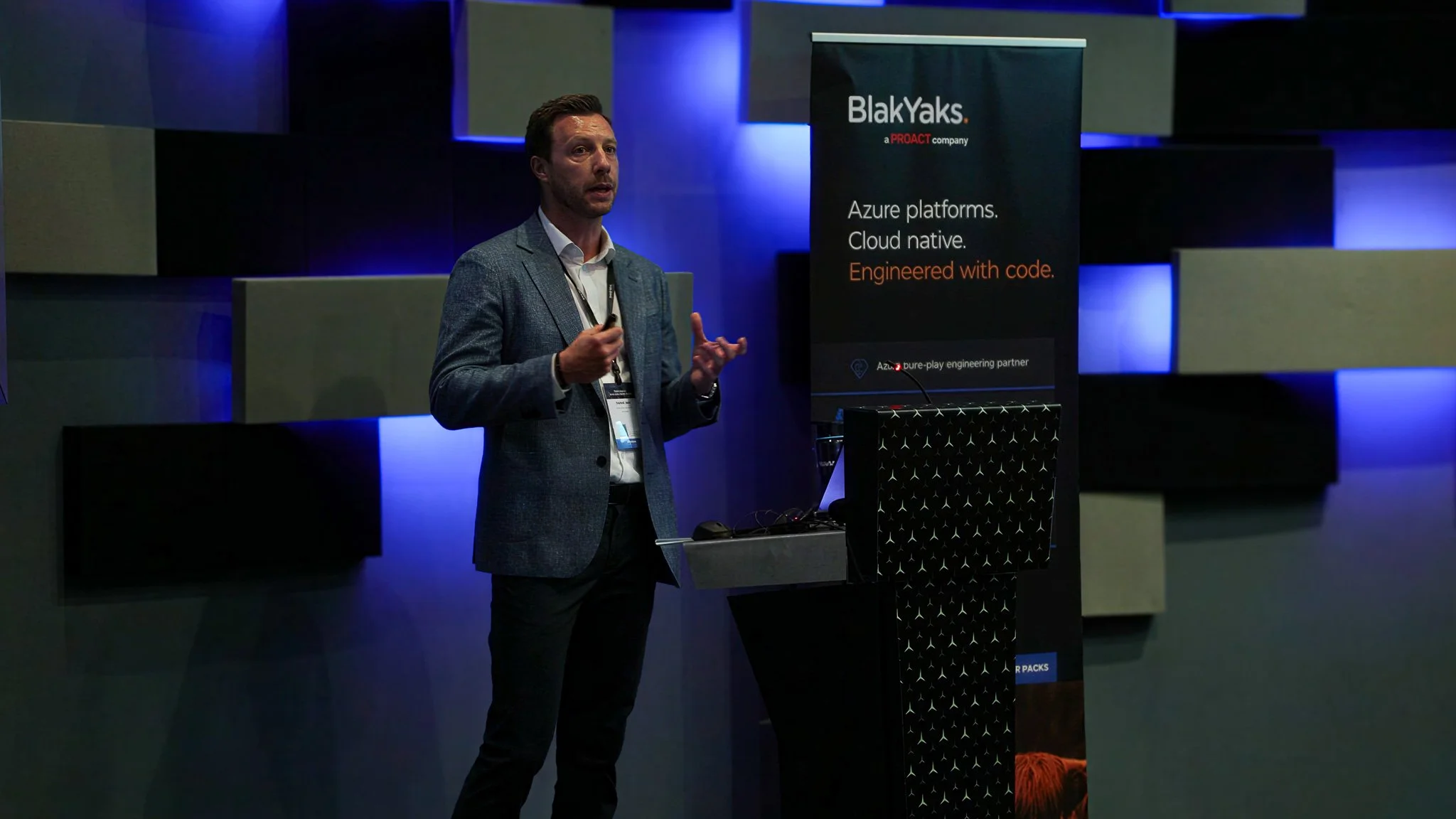
The presentation described three defining characteristics:
Intelligence available on demand
Human-agent teams organised around outcomes
Employees increasingly able to build, delegate to and manage agents.
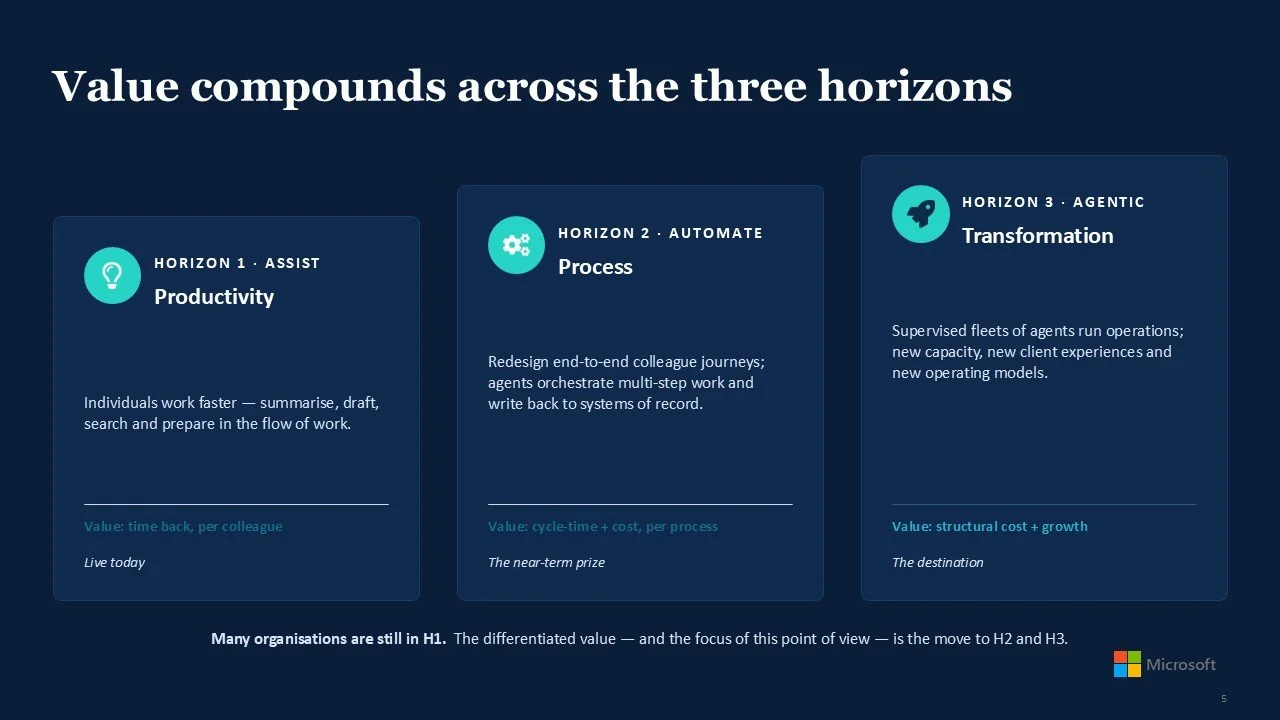
The opportunity extends far beyond individual productivity. Microsoft's framework outlined four areas of AI value: personal productivity, business process re-engineering, innovation and customer engagement. It also mapped the progression from Assist, where AI helps individuals work faster, through Automate, where agents orchestrate multi-step processes, to Agentic, where supervised agents begin to run operational workflows.
For technology leaders, this poses a set of much bigger questions outside of which AI model or new tool to select:
The real challenge is building the platform, governance and organisational capability required to use AI at scale.
Without human direction, clear accountability and the right controls, increased compute and automation can simply create activity without meaningful business value.
The most successful organisations will be those that combine human judgement with AI capability, creating learning loops where people, platforms and technology continuously improve together.
What does scaling Azure look like inside the enterprise?
The third session of the day brought real-world experience to the forefront. We were delighted to welcome two of our customers, John Davison, Group Chief Information Officer at First Central Group, and Steve Edwards, Head of Cloud, Infrastructure and Portfolio Delivery at Close Brothers, who joined Dirk Anderson, CEO at BlakYaks, for a fireside discussion.
Drawing on their own experience, the panel discussed what it takes to build and operate Azure environments that can keep pace with growing business demand while meeting increasing regulatory expectations and managing greater technical complexity.
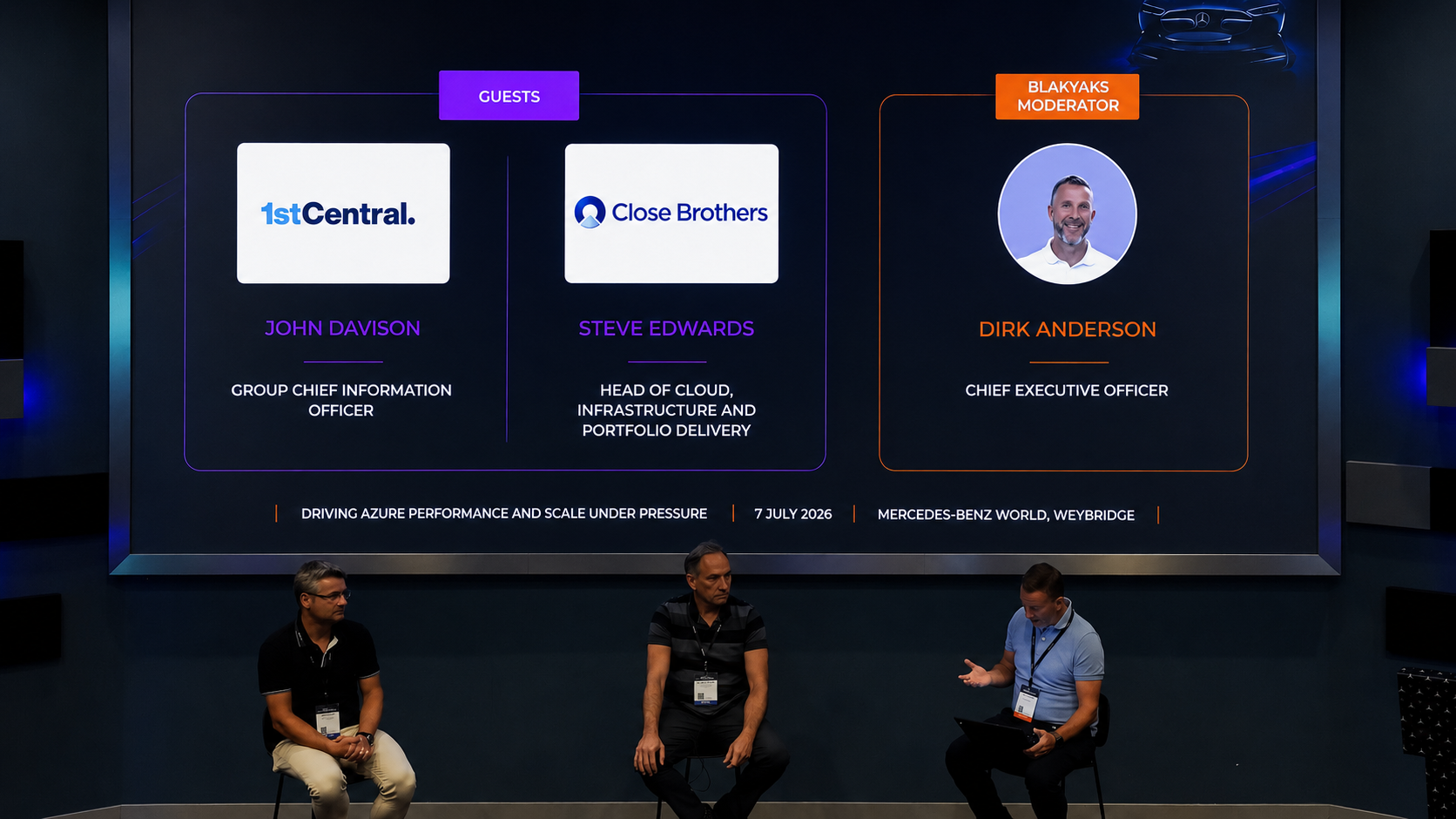
The discussion went beyond technology itself to explore how organisations build operating models that support innovation at scale. That included balancing developer freedom with governance, investing in AI-ready platforms and ensuring technology priorities remain aligned with business goals.
Along the way, several practical questions were raised that many technology leaders are now facing:
How do we give development teams the freedom to innovate while maintaining central governance?
How do we avoid hundreds of disconnected AI experiments becoming the next generation of shadow IT?
And how do technology leaders explain the value of long-term platform investment when the benefits are not always immediately visible to the wider business?
Although the topics varied, the discussion consistently came back to the same core principles. These included:
Policy by code
Self-service as an operating model.
DevOps as the delivery spine.
For enterprise organisations, governance cannot rely solely on documents, manual approvals and central teams acting as gatekeepers.
Where possible, controls need to be engineered
directly into the platform.
Infrastructure as Code, automated policy enforcement and repeatable deployment patterns allow teams to move faster because the safe path becomes the easiest path.
Self-service then becomes an operating model that gives engineering teams access to approved capabilities within clearly defined boundaries. This balance between autonomy and control will become even more important as AI agents begin to participate directly in enterprise workflows.
Those customer experiences set the scene for the day's final technology session. In Part 2, we look at Stuart Anderson's session on accelerating AI adoption responsibly, and why stronger Azure foundations, clear governance and increasing platform maturity will determine how confidently organisations can introduce greater AI autonomy. Read the second part here.